


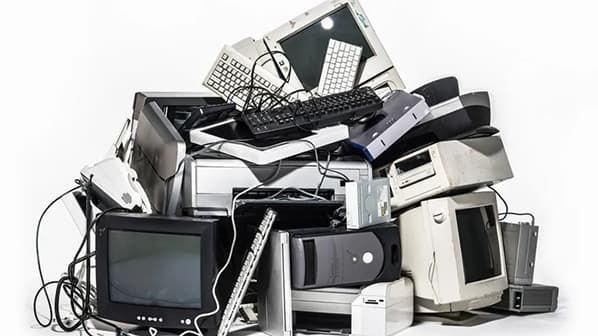
The personal computer market is going through unprecedented crisis that is driving the smart shoppers off the retail shelves and into the online shops. To date, the combination of memory crunch, AI pressures tapped the manufacturing capacity, and price gouging on the Secondary Market have not only made the secondary market as an economical option, but the only logical decision of budget-conscious builders.
A Brief Guide to Construction Jobs
Related searches
The Arithmetic of Broken Economics
The statistics are humiliating. An old Trident Z5 Neo DDR5 memory kit priced at 117.99 is now priced at 429.99 in retailers- this is a 3.5 x increase in the original price. Better, scalawags on eBay are selling the same module at a price of $836.54, which is close to seven times more than it was priced at before the crisis. In the case of 32GB DDR5 memory with 6000 MHz, the current cost to customers has increased to 220-230 due to this memory being able to run at 6000MHz, which is 70 to 80 percent higher than the same memory a few months ago. In the meantime, the used DDR4 memory is available at the price of 100 dollars with 64GB of storage and thus, the last-generation RAM is strangely cheaper than the present-generation one.
When they are manufacturing, they are desperate. Dell and Lenovo announced price increases of up to 15 percent for prebuilt systems. Some vendors have resorted to selling computers without RAM installed, forcing consumers to source memory separately and gambling on future price stabilization. The IDC research firm projects that average PC prices will jump between 4 and 8 percent throughout 2026 as the shortage deepens.
Where the Used Market Delivers Value
The graphics card market perfectly illustrates the used advantage. An RTX 4070 Ti costs $849 brand new on Amazon. On eBay, identical units sell for approximately $500—a 41 percent discount. The RTX 4070 Ti Super exhibits similar patterns: $1,179 new versus $725 used, saving $454 per card. These are not ancient architecture cards with diminished relevance; they are current-generation components still capable of exceptional performance for gaming and professional workloads.
CPUs present arguably the strongest case for secondary markets. A decade-old Intel Core i7-3770 processor trades hands for $30 to $50 on eBay, enabling budget builds that would be impossible with new retail inventory. Storage tells a parallel story. As 1TB NAND flash memory chips increased 123 percent in cost between July and November 2025—climbing from £3.80 to £8.45 per unit—refurbished enterprise-grade hard drives emerged as pragmatic alternatives. Recertified 22TB Seagate drives are available at factory for £245 and offer significantly more capacity per pound than desperately finding SSD inventory.
Risk Versus Reward Computation
Components are not everything that can be thought of secondhand. CPU coolers, cases and memory modules are relatively harmless: they have no degradable parts, have low failure rates, and their warranties are usually honored even through changes of ownership. Corsair, G.Skill and Crucial regularly offer lifetime coverage on RAM which is limited. Air coolers are essentially permanent metal blocks with zero moving parts, making them ideal candidates for repeated resale.
However, power supplies, motherboards, and storage devices demand new purchases. Power supplies degrade over time; capacitors and other internal components lose integrity with each power cycle, rendering them potential hazards to entire systems. Hundreds of failure points are packed into motherboards in form of capacitors, MOSFETs, PCB traces and memory slots which can at any point create intermittent problems that cannot be seen with the naked eye. Hard drives and SSD have limited write-cycle budgets and are generally offered with worn warranty claims.
The Inevitable Conclusion
The personal computer market has fundamentally broken. New hardware pricing has detached from rational economics, driven by supply constraints that will persist through 2026 and beyond. Manufacturers prioritize high-margin server memory for data centers over consumer gaming systems. Entry-level new GPUs have vanished, replaced by extravagant pricing across every tier.
For anyone assembling a system in 2026, the used market has transformed from a discount option into the only viable path forward. DDR4 memory that outprices DDR5, graphics cards selling at 40 percent discounts, and CPU inventory at near-zero retail prices create an irrefutable economic case. The secondary market has become not a compromise, but the market's salvation.
< Prev

Next >

Guess you like
-
Rolling Worlds in a Carry-On: Building a Portable Gaming Kit for Real Travel
-
MAR10 Day 2026: How Nintendo Turned Mario Day Into a Global Gaming Festival
-

Amazon Launches Lens Live, AI-Powered Shopping That You Can Use Right Away
-
From Gaming Handhelds to Data Centers: How Meta Reworked Linux CPU Scheduling
-

Switching AI Assistants: What You Gain and What You Lose
-
Photoshop’s Conversational AI Editor Signals a New Era of Photo Editing
Trending
-
 1
1Six Hidden Features Transforming Your Opera Daily Browsing
-
 2
2Forza Horizon Six Welcomes Veteran Drivers With Elite Supercars
-
 3
3The Dawn Of DeepSeek V4: Reshaping The AI Landscape Against Industry Giants
-
 4
4Samsung Transforms OLED With Glasses Free Three Dimensional Technology
-
 5
5Unleashing Hidden Speed on Your Modern Sony Console
-
 6
6Canva Transforms Daily Workflows Through Seamless Connectivity