


Since its official launch in 2024 and subsequent expansion in 2025, Apple Intelligence has been at the forefront as the foundation of Apple’s overall artificial intelligence structure, redefining the way users can engage their iPhones, iPads, Macs, Apple Watches, and Vision Pros. More than simply a “assistant” tool, Apple Intelligence is Apple’s attempt at providing a more private and personal way at a deep level with generative AI.
A Brief Guide to Construction Jobs
Related searches
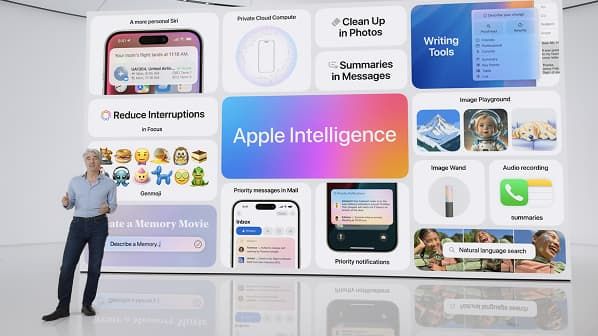
In essence, Apple Intelligence is Apple’s private intelligence assistant integrated into its operating systems that support Apple devices: iOS, iPadOS, macOS, watchOS, and visionOS. Apple says that Apple Intelligence is the integration of generative models that can generate and understand language and images along with personal Apple information on the user’s device. This assistant on the iPhone is not simply designed as an application; on the contrary, Apple Intelligence is designed and integrated across Apple devices. It helps assist Apple users with day-to-day tasks such as writing, communications, organizing pictures and videos, and automations.
One of the first and most recognizable areas of Apple Intelligence is Writing Tools. This suite of capabilities enables users to rewrite and improve text in native and third-party apps. As an example, in the Mail or Notes app, users have the ability to turn a draft into a more formal or shorter text with stylistic features, or compress large paragraphs of text into a shorter, succinct bullet or table. Such integration transforms the manual editing processes that would have been otherwise into automated AI-driven processes.
Apple Intelligence also brings advancements in communication. Apple Intelligence brings Live Translation, which operates in Messages, Face-Time, and even in phone conversations. With this, conversations between individuals using different languages can be interpreted immediately within the Apple world—whether in writing or talking—without the need to hop from one application to another. Intelligent prioritization of important e-mails and alerts also helps the user focus on the most fundamental aspect.
In the area of visual and creative intelligence, Apple has launched some novel features. Image Playground enables you to create original visuals, such as artwork or drawings, based on a text description. To complement this, Genmoji helps you create personalized emojis based on a text message or a picture, so you can never express yourself quite like you did before. These features extend social communication and creative expression capabilities, apart from generating static pictures. As part of other enhancements, Apple Intelligence improves the Photos app with the addition of “Clean Up” that automatically recognizes unwanted objects in a picture, getting rid of distractions so you can focus attention on the original photo you wanted. Users are also allowed to create ‘memory movies’ based on a natural language description, which automatically selects pictures and videos that fit a theme, then uses that material to build a narrative with a storyline and music.
Perhaps its most notable technical feature, however, is its privacy-focused architecture. As many AI experiences that heavily leverage Apple Intelligence typically run many AI tasks on remote servers in the cloud, Apple Intelligence instead uses its custom-built processors and neural engines to run most tasks on the device itself. In other words, instead of transmitting information such as message contents, photos, or other information related to devices to remote servers for processing, it all happens without actually transmitting information to servers. In cases where requests for computation involve greater computational power, for example, in tasks requiring larger models, Apple uses Private Cloud Compute, in which it processes information on its servers without actually keeping users’ information on record. An independent privacy auditor can review its code to ensure such privacy commitments.
Another key feature of Apple Intelligence is its effect on Siri. Siri, once criticized for the lack of conversational capabilities and take-action functionalities, has been entirely rebuilt with improved understanding and the capacity to take actions on various applications as commanded. Users can message and speak to Siri without any issues, as Siri will be able to retain a conversation and even perform multiple actions, such as searching particular photos, drafting, or adding contacts when receiving a message. This enhances Siri to become a true intelligent assistant.
For encouraging overall innovation, Apple has made the on-device foundation models that enable the functionality of Apple Intelligence available to third-party app developers through specific frameworks. This will allow apps to have intelligent capabilities to perform fast, offline, and cost-free tasks such as natural language searches, personalized quizzes, or intelligent assist functionality without compromising on the level of user privacy.
< Prev

Next >

Guess you like
-

Gaming Laptops vs. Desktop PCs: Which Is Truly Best for Gaming?
-

Amazon Launches Lens Live, AI-Powered Shopping That You Can Use Right Away
-

What RV Passengers Should Never Attempt to Do on the Run
-

How to Own a Convertible Without Breaking the Bank
-

Practical Upgrades That Give Your Old Android a Brand New Life
-

Switch 2 Accessories Redefining Nintendo’s New Console
Trending
-
 1
1Six Hidden Features Transforming Your Opera Daily Browsing
-
 2
2Forza Horizon Six Welcomes Veteran Drivers With Elite Supercars
-
 3
3The Dawn Of DeepSeek V4: Reshaping The AI Landscape Against Industry Giants
-
 4
4Samsung Transforms OLED With Glasses Free Three Dimensional Technology
-
 5
5Unleashing Hidden Speed on Your Modern Sony Console
-
 6
6Canva Transforms Daily Workflows Through Seamless Connectivity