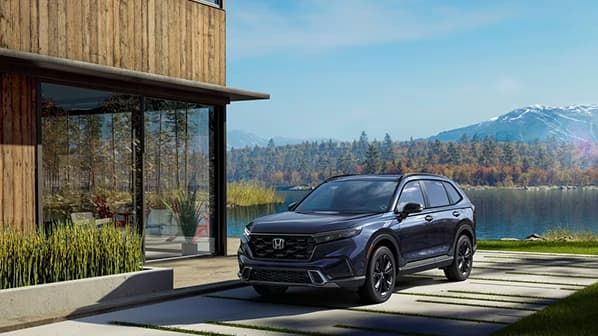
The 2026 Toyota RAV4 and the 2026 Honda CR-V both function as compact SUVs which provide excellent safety performance and moderate maintenance expenses and appeal to a wide range of consumers. The vehicle category provides only partial information which insurance companies utilize to determine their pricing structure. The insurers determine premium rates through their actuarial risk model which assesses how often claims occur and how severe repairs are and which vehicles get stolen and which drivers operate their vehicles under normal conditions.
The two SUVs which appear alike end up creating different insurance costs because of this reason. The difference exists as a minor yet measurable factor which becomes more significant during the extended period of vehicle ownership.
Average Insurance Costs: A Near Tie With a Slight Edge
The two insurance cost options appear almost equal but one shows a slight advantage The Honda CR-V offers lower insurance costs than the Toyota RAV4 based on current 2026 data but the actual difference remains tiny for practical situations.
The Toyota RAV4 costs around $1,106 each year for basic coverage while its complete coverage expense reaches approximately $2,140. The Honda CR-V costs about $1,108 each year for basic coverage while its complete coverage expense reaches approximately $2,139.
The two vehicles exist in a tie because the CR-V normally costs a few dollars less each year depending on which insurance company and driver profile evaluates the situation.
The broader datasets prove this pattern. The CR-V maintains its status as one of the most affordable SUVs to insure throughout the United States because it frequently appears on lists of vehicles with the lowest insurance costs while the RAV4 occupies a slightly higher insurance cost range which remains budget-friendly yet does not reach the lowest price category.
What Actually Drives the Difference
The factors which create the minor insurance disparity between these models include specific elements which insurers use to determine their pricing structure.
The first element to consider involves vehicle price structure. The 2026 RAV4 model line now focuses on hybrid vehicles which results in higher insured vehicle values when compared to CR-V which offers both gas and hybrid vehicle options. The higher vehicle price causes an increase in both comprehensive and collision insurance premiums.
The second element involves the complexity of vehicle repairs. The RAV4 hybrid system uses dual motors which increase the repair costs that result from accidents because of its advanced technology. The higher repair costs which result from severe damage lead to insurance companies increasing the cost of their premiums.
The third element involves the use of historical claims data. The insurance companies use historical loss ratios to assess their business operations. The CR-V serves as a family-friendly vehicle which brings low risk on claims because of its family-oriented design and low accident risk behavior.
The fourth element involves the impact of theft patterns. The theft rates for certain RAV4 model years have shown sharp increases at specific locations which results in higher insurance costs for those areas.
How Driver Profile Changes the Outcome
The model-level averages provide useful information but they only explain part of the total picture. The driver-specific factors determine which vehicle costs higher insurance premiums.
The 40-year-old driver who has no traffic violations will pay below $2,000 each year to insure a CR-V while younger drivers will have to pay over $7,000 for the same vehicle because of their higher perceived risk.
Location also matters. The urban drivers who operate their vehicles in areas that experience high traffic or have elevated theft risks will pay substantially increased insurance costs regardless of their vehicle selection. The combination of credit score and annual mileage and deductible selection creates further problems for determining vehicle costs.
The RAV4 and CR-V have comparable basic costs which causes personal factors to become more significant than vehicle differences. Your insurance costs depend on your profile because it determines which SUV becomes the less expensive option.
Long-Term Ownership Perspective
The insurance expenses between the two cars display minimal variations throughout five years because they typically cost under $100 total. The 3 major cost components of vehicle ownership bring more weight than insurance expenses when vehicle buyers evaluate their purchases.
The CR-V provides a built-in advantage because of its basic design. The lower entry cost of the vehicle along with its multiple trim options helps maintain lower average insured values which make insurance premiums more stable throughout time.
The RAV4 hybrid vehicle lineup will lead to increased expenses because it includes more hybrid models which result in increased repair costs despite the fact that the expense difference remains small.